Thursday, April 27, 2017

Homework Dilema: Student Questions

We have currently been surveying the students about “Homework Dilemma”. We asked a total of 4 questions to the Montrose High School and received 53 responses back. Our question and their responses will be listed below:


    The first question we asked was how much time you spend on homework outside of school which isn’t including time spent in study halls or throughout the day and received 52 responses back. 42% of the Montrose High School students said they spend 2-4 hours of homework every night. Next on the tile was an hour spent and 21% said they spend that much. 9% said they never have any homework so they don’t have to spend time outside of school and the other 28% spend 10 minutes to 45 minutes.
    The second question we asked was how often do you get assigned homework and we received 53 responses the majority said everyday which is 98% and one person said never which completes the percent tile with 2%.
   
    The third question we asked was what in your opinion do you think the purpose of homework is and we received 53 responses back ranging from paying attention to bettering ourselves. 53% said that they think the purpose of homework it to make sure we are paying attention so we know what is going on and the other 47% of the HS said they think it is to better their selves so they know how to use it in the real world.


     The last question we asked the High School Students was since homework is a portion of your grade what would you like to see replace that portion of your grades. We received back 49 responses and it was a tie, 50% said they would like to see notes and participation to be a portion of their grade and the other 50% said they would want lab reports, projects, quizzes and tests to be replaced for the portion of their grades.

Tuesday, April 25, 2017

The House Drawing Competition

Decorating Your House:
As most of you know each high school class has a “Harry Potter House”. So Miss Kruse got to thinking and she would like people to submit artwork for their house. This is going to be a competition between the classes. May the odds forever be in your favor.
THE STIPULATIONS
Must be school appropriate.
Has to include either a Harry Potter Theme or what you are doing in class
Must include your house’s colors (if Harry Potter Themed.)
Must be done outside of class!!!!(besides study hall)
Judging will include all artwork on the wall.
Has to be given to Ms. Kruse BY MAY 11TH.
There will be INDIVIDUAL rewards that will be Awarded to that house(Prize is UNKNOWN at this time)
Any tampering with artwork will be PUNISHABLE at teacher’s discretion.
PRIZES:
1. 1000 points
2. 750 points
3. 500 points

Monday, April 24, 2017

Montrose's Newest Soldier


            A member of our school has decided to spend her life fighting for America. Kylie Heumiller has enlisted into the Army. Please take the time to congratulate her on becoming a soldier in the United States Army. Read her responses on what she will be doing, what the process is like, and what her future goals are.

1.)    What made you decide to join the army? Who was your main motivation?
My family and this country made me want to join the Army. My mother was a huge motivation to join, because it was something she had always wanted, and because I know that it is something that would make her proud. Knowing that I am giving back to my country in such an amazing and cool way made it easy to decide this is what I wanted to do with my life. 


2.) What day did you enlist in the army?
 April 14th, 2017 is the day I took the Oath to protect this country and its people and constitution. 

 
2.)    What job will you be doing in the army? What does this job entitle?
a.  13FoxTrot, which is also known as a fire support specialist or forward observer.
b. A soldier in this job is responsible for directing artillery fire and close air support, which is a ground attack by aircraft onto enemy positions. This often overlooked position is considered one of the most challenging positions on the battlefield for a variety of reasons. FOs are highly skilled and usually exceptionally intelligent. They are also able to work silently for long periods of time, as some missions may range from a few hours to several weeks, long. They can operate with minimal support located either on or behind the enemy lines.

 
3.)    Where will you be going to basic and AIT next summer?
Both my Basic Training and AIT with be at Ft Sill in Oklahoma. It will last a total of 20 weeks and 4 days. AIT will be taking 11 weeks. 

 
4.)    Are you full time in the army?
Yes, I am Active Duty.

 
5.)    Where would you like to be stationed after returning from AIT?
 In the Army you get to choose three places you would like to be stationed and they try to pick one of the places for you, although it is not guaranteed. So far I have choose Hawaii and Germany, and would like to find another in the states but haven’t decided where yet.

 6.)    How long was the process of enlisting in the army?
It took around four months from the time I contacted a recruiter to when I went to MEPS and swore in. It may sound like a long time, but it really didn’t feel that long. 

 
7.)    What made you decide the army over the navy, coast guard, marines, or air force? 
The Army had more of what I was looking for, benefits and future soldier program wise. It was also what my mom was planning to do, so I figured why not pick up what she started. 

 
8.)    What is your recruiter’s name? Was he helpful in the process of enlisting? If yes, what was he helpful with?
a.      SFC Lindemann.
b.      My recruiter was extremely helpful throughout the entire process. He could answer all my questions, and he was very approachable and understanding the entire journey. He helped me chose a career in the field and prepare me for MEPs. 

 
9.)    What would you recommend for someone interested in finding out more information about military? What questions would you recommend asking if interested in the military?
Goarmy.com lets you find a recruiting station near you, and can even link you up with a recruiter, who are very flexible and will come to you at any time. Be sure to ask about benefits, the GI Bill, Sign-On bonuses, and any other questions you have, whether or not they feel unimportant because they probably are. ​


GIANTS! Were they real?

Today, sci-fi movies and fantasy novels have sparked so much interest in non-existent worlds and creatures that people begin to question whether or not said places or things were real. Today, giants are a more popular mythical creature. From the Game of Thrones to BFG, different takes and looks and “source of creation” have varied greatly by what authors or directors feel giants may have looked like.

Some people claim that the world was entirely covered in giants, possibly on every continent. Websites claim that “proof is everywhere” or at least, it was. The claims are that any proof found has been confiscated, or it had just vanished.  Supposedly, some farmers in America all across the country have found up to 60 skeletons in various caves. After their discoveries, the bones then vanished. The farmers claim the bones changed from 10-12ft tall to 6-8ft in the government’s attempt to hide the real discoveries.
Native American folklore also speaks a lot of giants, but view them as gods and goddesses on earth. Most stories were told around a fire, and passed down from generation to generation. Some stories are very different, while some follow the same theme and actually make a lot of sense.

All in all, it’s hard to say whether or not giants were or weren’t real. Sometimes the internet it hard to trust, and other times it’s very convincing. You will have to decide for yourself if you believe giants were once real.   Image result for mythical giants
Follow these links to do some of your own research:
http://archive.cudahynow.com/blogs/communityblogs/187467521.html
http://www.huffingtonpost.com/2014/11/04/searching-for-lost-giants_n_6097272.html
http://coolinterestingstuff.com/did-giants-really-exist

Gemini, "The Twins"

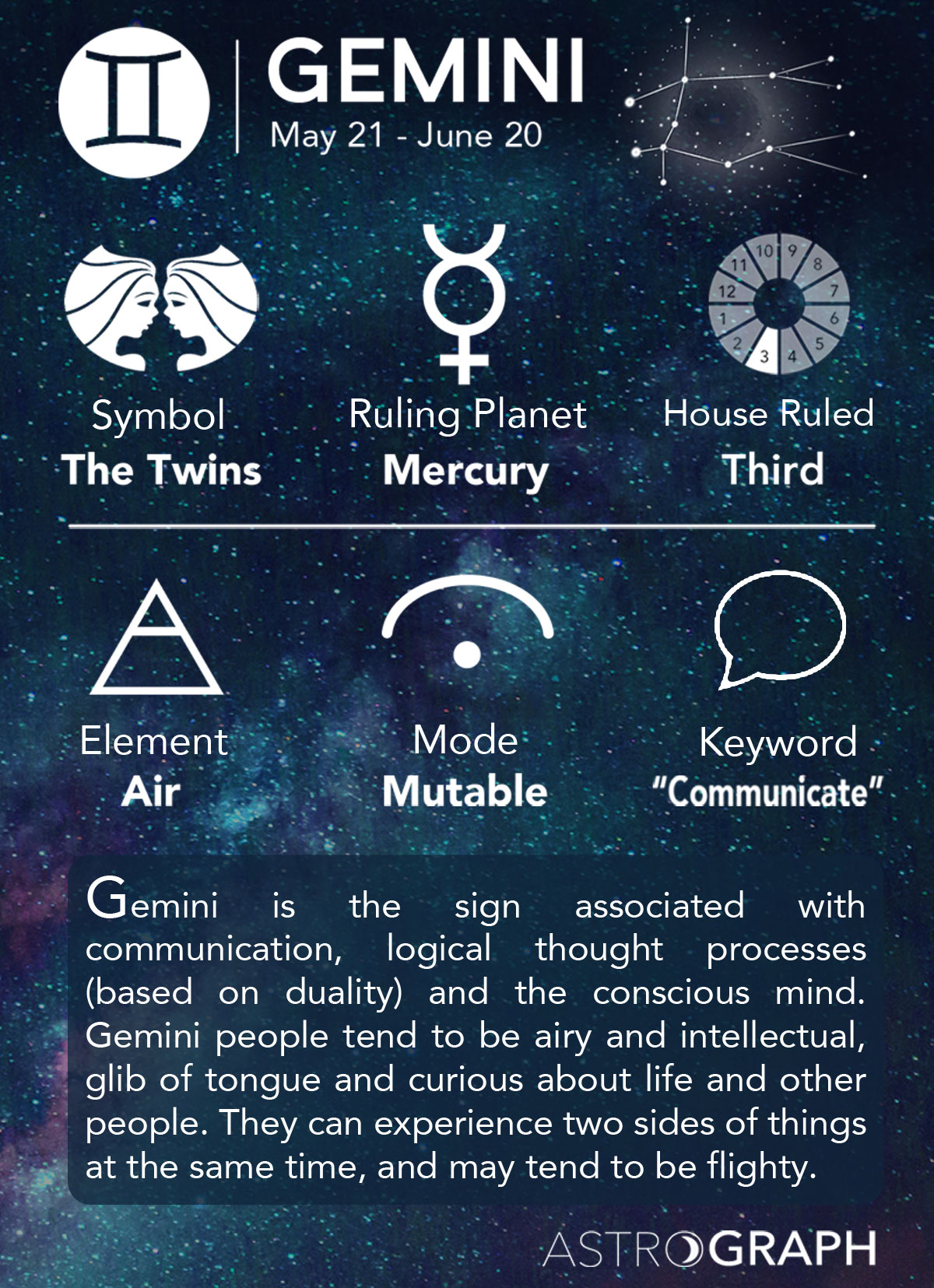
Image result for geminiImage result for geminiOur next Zodiac sign is Gemini, “The Twins.” Being a Gemini means you were born between the dates of June 21 and July 20. The element of this sign is Air. Along with this, you have a Mutable quality. Your colors include light-green and yellow, and your day of the week is Wednesday. Gemini’s ruling planet is the closest to the sun, Mercury. You have the greatest overall compatibility with a Sagittarius or an Aquarius. Lucky numbers of a Gemini include 5, 7, 14, and 23. Your strengths include being gentle, affectionate, and curious, being adaptable, and having the ability to learn quickly and exchange ideas. Weaknesses include being nervous, inconsistent, and indecisive. Stay tuned for our next Zodiac sign!

Wednesday, April 5, 2017

Taurus

Image result for taurus horoscopeImage result for taurus horoscopeLast issue we had Aries, “The Ram.” Now we have Taurus. The dates for Taurus are May 13 to June 21. Taurus is known as “The Bull” of the Zodiac. As Taurus, your element is Earth. You also have a fixed quality, like other signs. Your colors are green and pink as this sign. Your days are Monday and Friday, which are ironically the “worst” and “best” days of the week. Your ruling plant is Venus, the only planet closest to the size of the earth. You have the greatest overall compatibility with Scorpios and Cancers. Your lucky numbers include: 2, 6, 9, 12, and 24. The strengths of a Taurus are that you are reliable, patient, practical, devoted, responsible, and stable. On the contrary, the weaknesses include being stubborn, possessive, and uncompromising. Check back next issue to learn about Gemini, “The Twins.” 
Image result for taurus

Harry Potter House Descriptions - Part Two

Hufflepuff
Image result for hufflepuff crestHufflepuff is the second of the four Houses, and another one of the Houses at Hogwarts. As seen on the crest, the animal is a badger, and the colors are yellow and black. These colors were chosen because Hufflepuff is associated with the element of earth, and so yellow represents wheat and black is emblematic of soil. The founder of this house was Helga Hufflepuff, who was the Head of House; this position now belongs to Pomona Sprout. The ghost of the House is Fat Friar; their common room is the Hufflepuff Basement. The dormitories and common room have never been seen by anyone who isn’t a part of the House. This is the only of the four Houses that has a security device to prevent intruders from entering. You have to tap a certain barrel a certain number of times to enter. By either tapping the wrong barrel, or tapping the right barrel an incorrect number of times, the lid of another barrel will burst off and drench the imposter in vinegar. If you get past the trap, you make it to a tunnel that leads you to the dormitory. The Hufflepuff dormitory always feels sunny, as it as a quite cozy and welcoming place. The Hufflepuff common room is round, large, and earthy with low ceilings. The view from the round windows in the room are of dandelions and rippling grass. The décor of the room emphasizes the earthy-feel; plants are hanging and resting all around the room, and some of the plants even sing and dance. There are plush, cozy yellow and black sofas and chairs that welcome the Hufflepuff students to relax and discuss any interesting specimens the Head of House, Professor Sprout, brings in. For a student to retire to their dormitory, they pass though big, round doors in the walls of the common room.
The Head of House for Hufflepuff before and during the time Harry Potter was at Hogwarts was Pomona Sprout. She was the Herbology professor. There is a possibility that before Pomona was appointed to be the Herbology professor and made the Head of House that Herbert Beery, the previous Herbology professor, was the Head of House, depending on if he was a Hufflepuff or not.
When it came to deciding who was qualified for Hufflepuff, the Sorting Hat said:
"You might belong in Hufflepuff,
Where they are just and loyal,
Those patient Hufflepuffs are true,
And unafraid of toil
"
This meant they possessed the traits of loyalty and being unafraid of toil, or danger. Many, if not all, of the students that belong to this House are known to be hard-working, friendly, honest, and rather impartial as well. They are not as competitive as the other houses are, and they are more modest about their accomplishments. This House is the most inclusive of all four; they value hard work, dedication, patience, loyalty, and fair play instead of a particular aptitude in the students. They seem to have the least rivalry with other houses, except in Quidditch.
It is claimed by Minerva McGonagall that all four houses produce exceptional witches and wizards, but due to the founder’s policy of accepting any student, and their poor performance in the House Cup, they are often thought to be the House of the less talented witches and wizards. This superstition, though, is merely an understanding of the poem by the Sorting Hat. This House has produced a great amount of successful and influential wizards and witches. A great number of exceptionally skilled people of the wizarding world also hold origins with Hufflepuff. They have given the fewest amount of Dark Wizards than any other House at the Hogwarts Castle.  This is mostly likely due to their cheerful and friendly demeanor. They firmly demonstrated their loyalty in 1998 during the Battle of Hogwarts, when they were only second to Gryffindor in the number of students who were willing to stay and fight against Voldemort and his forces in defense of the school.
There are many known members of Hufflepuff, including the House Ghost, the Fat Friar. More famous members include Bridget Wenlock, Gorgan Stump, Newton Scamander, the current House of Head, Pomona Sprout, Cedric Diggory, who was killed in his sixth year at Hogwarts, and so many more. To look at other known members, check the wikia.

Make sure you stay tuned and check out the next issue to learn about Ravenclaw and Gryffindor!

Harry Potter House Descriptions - Part One

Everyone most likely knows about the House Cup Competition going on in the high school English classes with Ms. Kruse, but not many people know about the Houses themselves. The order for the grades go Freshmen – Slytherin, Sophomores – Hufflepuff, Juniors – Ravenclaw, and Seniors – Gryffindor. The original plan for the houses were that you would stay with your house all four years. That means this year’s 8th graders would be Gryffindor next year, and they would keep rotating; this year’s Freshmen would still be Slytherin next year, and so on. But due to lots of comments about people wanting to be Gryffindor, Ms. Kruse decided to keep the houses based on the grade. That would make next year’s Freshmen be Slytherin, and next year’s Seniors still be Gryffindor. Now we are heading onto the descriptions of our first two houses: Slytherin and Hufflepuff.

Slytherin 
Image result for slytherin crestSlytherin is just one of the four houses at the Hogwarts School of Witchcraft and Wizardry. The founder of this house was Salazar Slytherin, hence the name “Slytherin.” As seen on the House Crest, the animal is a Serpent, or snake, and the colors are Green and Silver. This house corresponds with the element of water since serpents are commonly associated with the sea and locks in western European mythology, along with serpents being physically fluid and flexible animals. The colors also correspond with it; lakes and lochs often being green, and silver often associated with grey/gray rain water. The Head of Slytherin is Horace Slughorn; he passed the role to Severus Snape for fifteen years before taking the job up again. The House’s patron ghost is the Bloody Baron, and the common room for this House is the Slytherin Dungeon. The common room is also known as the dungeons of the Hogwarts Castle, and is underneath the Black Lake. Because of this location, the lighting is green, which is ironic considering the colors of the House itself. The only way to enter the common room is to speak aloud the current password in from of a damp stone wall. After the word is spoken, a concealed stone door will slide open, revealing the entrance. The only known Slytherin password is “pureblood”, and was used in 1992.

The Head of House is the person ruling the Slytherin House. Salazar was the Head of House in the 10th century. Horace Slughorn was in position from the 1920s-1982, and Severus Snape from 1981-1996. Snape was the Head of Slytherin for the first six years of school for the protagonist, Harry Potter. Potions master Horace Slughorn, the former Head of House, took up the position once again in 1997 when Snape fled with the Death Eaters at the end of Harry’s sixth year. When Snape returned later that year, he approved of Slughorn’s appointment, and didn’t assign any Death Eaters as a new Head of House.
The founder, Salazar, instructed the Sorting Hat to choose a few specific characteristics that he himself most valued. A few of the traits include being cunning, have resourcefulness and ambition. The Sorting Hat itself said:

“Or perhaps in Slytherin,
You’ll make your real friends,
Those cunning fold use any means,
To achieve their ends.”

According to the wikia, “Slytherins tend to ambitious, shrewd, cunning, strong leaders, and achievement-orientated.” They also contain highly developed senses of self-preservation, meaning they tend to hesitate before acting to weigh out all possible outcomes before they decide what should exactly be done. Another strong piece of information about the qualities of Slytherins is “According to Albus Dumbledore, the qualities which Salazar valued in the students he chose included cleverness, resourcefulness, determination, and ‘a certain disregard for the rules.’”

Blood Purity is claimed as a factor for selecting people to be Slytherin. Muggle-born Slytherins do exist, but since they are not pure-bloods, they are very rare. Despite this, there have been very definite examples of half-bloods in the Slytherin house, these people including Tom Marvolo Riddle, Dolores Umbridge, and Severus Snape. There have also been pure-bloods sorted into other houses besides Slytherin.

There is a superstition that all Dark Wizards were in Slytherin, but this is not true. Wizards like Peter Pettigrew, who was a Gryffindor, and Quirinus Quirrell, who was a Ravenclaw, were Dark Wizards. Though, there were Dark Wizards from this house. Tom Marvolo Riddle, who later became “Lord Voldemort,” is an example, as he began recruiting Death Eaters. Since his own house was Slytherin, it was difficult for him to recruit them there. There is a possible, though unlikely, claim that the Sorting Hat simply puts the people with bad intentions into Slytherin, regardless of the qualities they possess. It must be noted that Slytherins who oppose the use of Dark Arts and discrimination based on blood purity do exist; some of these include Horace Slughorn and Andromeda Tonks.
The traits of being cunning and ambitious are easily turned towards evil and ill purposes, but are not automatically negative traits; furthermore, being daring, and having intelligence and loyalty and also easily become negative traits. A quote about from Phineas Nigellus is: “We Slytherins are brave, yews, but not stupid. For instance, when given the choice, we will always choose to save our own necks.” There are exceptions to this rule, such as Snape, who Harry claimed was a “Slytherin and… probably the bravest man I ever knew”, and Regulus Black, who gave his life when he attempted to destroy one of the Horcruxes of Lord Voldemort.

The overall truth is that while most Slytherins turn out to be Dark Wizards, many members of the House do not have Dark leanings, and Voldemort has supporter groups in other houses. During the Battle of Hogwarts, although all of the Slytherin students left before the fighting started, many of them returned with Professor Slughorn as reinforcements to join the battle against Voldemort and his Death Eaters.

There are many known Slytherins, especially the Bloody Baron, who later became the House Ghost. Another famous person you might recognize, but did not know was a Slytherin, was Merlin. The list continues, including Phineas Nigellus Black, the rest of the Black family except for Sirius Black, Horace Slughorn, Tom Marvolo Riddle (aka Voldemort), Lucius Malfoy, Severus Snape, Regulus Black, Draco Malfoy, and more. The list stretches on. If you want to see everyone who was a part of Slytherin, check the wikia (linked in the paragraphs above). Now on to Hufflepuff.

Standardized Testing

Standardized Testing
            The middle school and juniors will be taking the Smarter Balanced Test in April. The schedule for junior testing is below:
Juniors:
Week 1
Monday, April 10th
·         10:05 – 11:45 Math Test with Mrs.Kroon
Tuesday, April 11th
·         10:05 – 11:45 Math Test with Mrs.Kroon
Wednesday, April 12th
·         10:05 – 11:45 Math Test with Mrs.Kroon
Week 2
Tuesday, April 18th
·         9:15 – 10:25 ELA Test with Ms.Kruse
Wednesday, April 19th
·         9:15 – 10:25 ELA Test with Ms.Kruse
Thursday, April 20th
·         9:15 – 10:25 ELA Test with Ms.Kruse
Friday, April 21st
·         9:15 – 10:25 ELA Test with Ms.Kruse
Week 3
Monday, April 24th
·         8:25 – 10:05 Science with Mr.Haynes
Tuesday, April 25th
·         8:25 – 10:05 Science with Mr.Haynes
Wednesday, April 26th
·         8:25 – 10:05 Science with Mr.Haynes
The 8th, 7th, and 6th grade schedule can get their testing schedule from their teachers.
            The Smarter Balanced Test is taken every year by the middle school and juniors. It is also taken by the elementary. In the past the students, such as yourself, took the Dakota Step Test. The Smarter Balanced Test was created to replace the Dakota Step Test. The Dakota Step Test was a paper test; the test was taken all day long for a few days. The Smarter Balanced Test is a computerized test. Instead of requiring the students to test all day long the students test for an hour to an hour and a half.

            If you are interested in studying or practicing for the Smarter Balanced Test go here. Some other information can be found on http://www.smarterbalanced.org/parents/. The main benefit of the Smarter Balanced Test is that as the test is taken, the test adapts. If a question is correct then the next question is harder. If the question is incorrect them the next question is easier. This means the online test is adaptable unlike the paper test. The Smarter Balanced Test is given to students to better understand what the teachers have taught them and what they have understood. The test is a test for the student’s knowledge, and a test for a teacher’s teaching ability.

GMOs

GMOs 

Genetically modified organisms, or more commonly known as GMOs, are created by scientists who have learned how to take DNA from one organism and put it into another. There are many pros and cons to GMOs, and even more ethical issues. A cost of genetically modified crops would be less safety for the environment; the crops that are genetically modified need a lot more herbicides and pesticides than a crop that isn’t genetically modified. This also causes bugs to become resistant to the pesticides, and grow stronger, forcing us to again use more pesticide/herbicide or make new chemicals that would work on the now resistant bugs and weeds. Cross pollinating is another problem, because when a resistant crop pollinates with a weed, that weed could become resistant to a weed killer, and grow wild and produce more resistant weeds. Financial costs are another downside, with 200 million spent on “Flvr Svr” tomatoes and almost none of it was able to be reclaimed. GM crops have cost America around twenty one billion dollars.
There are billions of people who are mal and undernourished, and there are millions who die every day from hunger worldwide. This third world hunger has caused scientists to race for a way to end world hunger, and GMO’s just might be the answer. GMO’s produce bigger yields without taking up more space, and can be modified to be better adapted to harsh conditions and become more resistant to pests. Herbicide resistant crops make it easier on farmers because they won’t have to till the soil beforehand, and they won’t have to use nearly as much herbicide on their crop. It also helps nutrient run off from the soil, which can in turn help our rivers and lakes. GMO’s make less food waste. Some potatoes have a modification so they don’t bruise, and this keeps them from being thrown away and creating more waste. Today we have GMO soybean seeds that have healthier soybean oils, less trans-fat, and increased levels of Omega 3. All of these pros and cons have stirred up large debates between people who do and don’t support GMO’s.

If people were better educated about GMO’s, and were told what they can do for us, I think more people would be okay with the fact that they’re eating GM things. GMO’s are tested for safety and allergen potential before they can be sent to market and to stores, making them safe to eat, and are in fact one of the most tested products in our history. With our biotechnology, we can create crops already adapted to the fast changing climates. Our biotechnology can also help make food more nutritious by inserting higher levels of nutrients in a tomato, for example, that have shown to be protective against human diseases. However, things like these cannot come to market because of the controversy of GMO’s, because people are still uneducated and unsure about eating GM products.